Category: Special Programming

The Very Hungry Caterpillar

I did this program last year right around this time, and thought I would post it so that other librarians and libraries could use it!
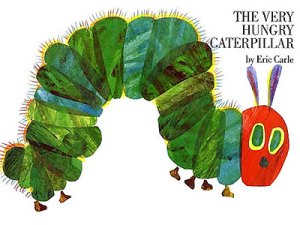
Flannelboard: “The Very Hungry Caterpillar”

I knew that most of the kids attending this program had likely read the book prior to signing up. At first I was going to combat that by using the pop-up version to add a little twist. But then, I discovered flannelboard templates online and the rest was history.

(And because I still adore this flannelboard, I went and took some better pictures of it!)

My favorite piece is the butterfly wing! I did a ton of painting to get it to look at close to the book’s illustrations as I could.
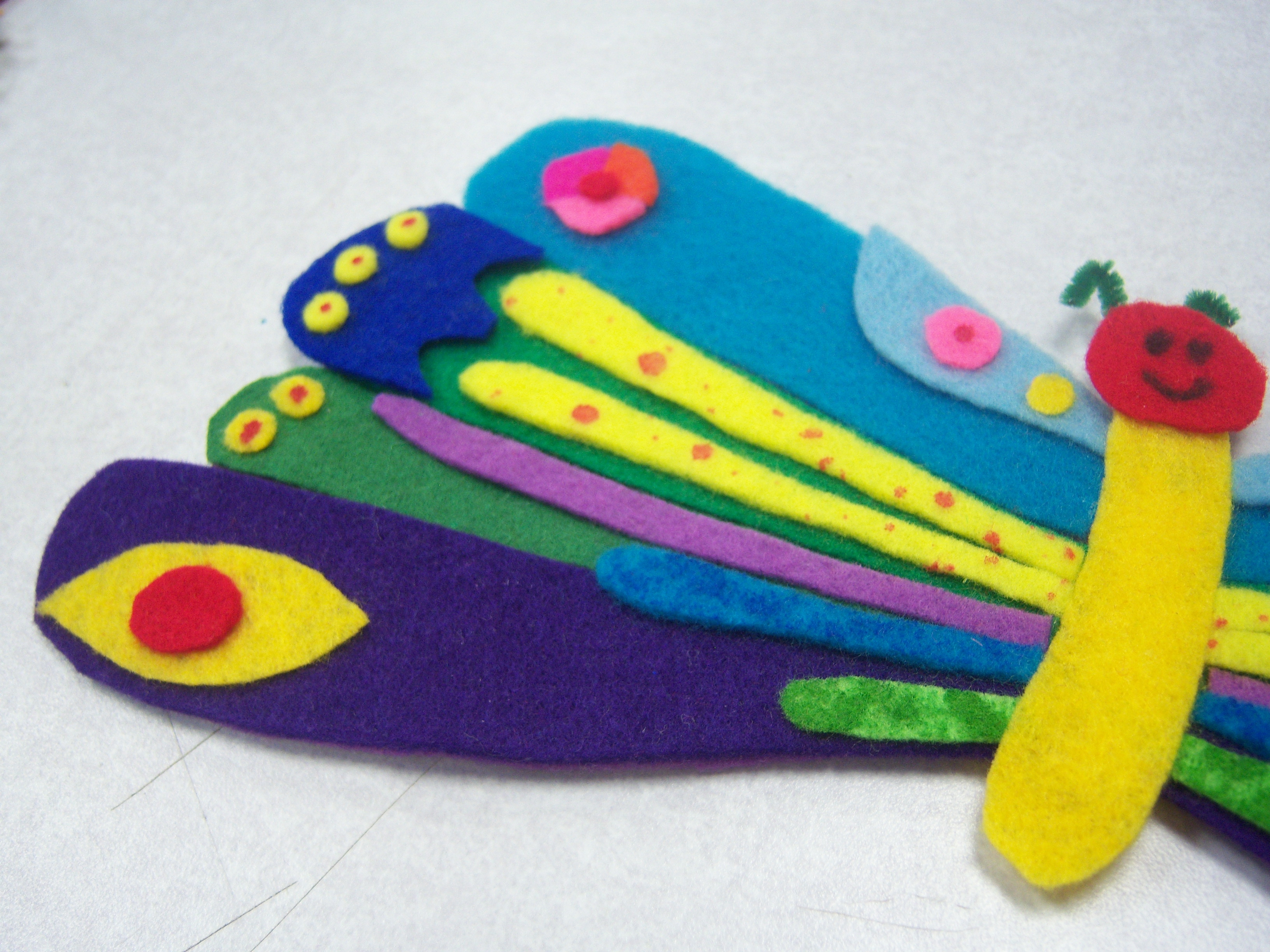
After the flannel (which was a HUGE hit; I had a lot of kids “reading” the story along with me), we sang a little song with our pretend butterfly hands.

Song: “Fly Fly Butterfly” (Tune: “Skip to My Lou”)
Fly fly fly butterfly
Fly high up in the sky.
Credit: The Virtual Vine

After our storytime portion, I did a game with the kids:

Game: Caterpillar Race
Form two teams of three. The course should be about 20 feet long, marked with a start and finish line. To play this game you’ll need 4 balloons. Each team lines up single file. Each player sandwiches a balloon between herself and the person in front of her. Each team is a little caterpillar! First team to run around the cones and back while keeping the balloons between them wins. (And you can’t use your hands to get the balloons in place!)
Credit: PBS Kids Zoom

For my kids, I modified by allowing hands to help the balloons and pairing kids up instead of making teams of three. I had a lot of younger threes/fours at the program and knew that the game would be too difficult.

And then, I did two different crafts with the kids!
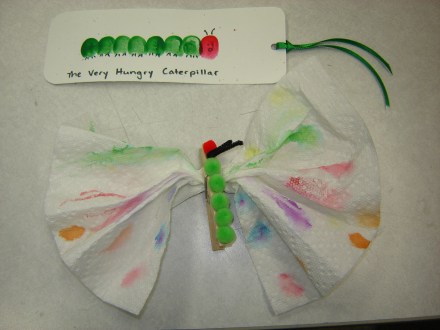
Butterfly/Caterpillar Craft:
Caterpillar:
• Glue pom-poms onto one side of clothes-pin. Twist 3 inch piece of pipe cleaner around top end to form antenna. Let dry.
Butterfly wings:
• Lay paper towel flat. Mix water and food coloring to make “paint.” Use paint brush to paint the paper towel. The more colors you use, the more colorful the butterfly. Allow to dry. When dry, fan fold the paper towel into approx. ½ inch sections.
Credit: DLTK Kids

I actually did the caterpillars ahead of time, using hot glue and making sure that it was nice and dry for the kids. And I SO did not want to mess with food coloring with preschoolers, so I wound up using watercolor paint. It worked just as well, with way less mess!

Bookmark Craft:
Use fingerpaint to make a caterpillar crawling across the bookmark. Add legs, eyes, and mouth with a black marker when dry. Hole-punch a hole at the top of the bookmark and tie a ribbon through it to finish it off.
Credit: Domesticali

I called each child up one at a time while they were watercolor painting and had them dip their fingers in fingerpaint to make the bookmark. Instead of taking each child to the sink after their turn — I used hand/face wipes from the store. Another way to simplify my life!

Then, while their butterflies and their bookmarks were drying, we played one more game!

Game: Butterfly Match-Up
Cut butterflies out of cardstock and then cut them in half. Hide them around the room and ask the children to help you match up the butterflies.
Credit: The Virtual Vine

Afterwards, each child got to keep the butterfly they matched up and took home both crafts. This program was a really big success as far as I’m concerned, and I had a lot of pleased parents leaving the programming room that day.

The Polar Express

Program Plan
1. Read “The Polar Express.”
2. Sing carols.
3. Play “Conductor Says” — Simon Says with a Polar Express twist.
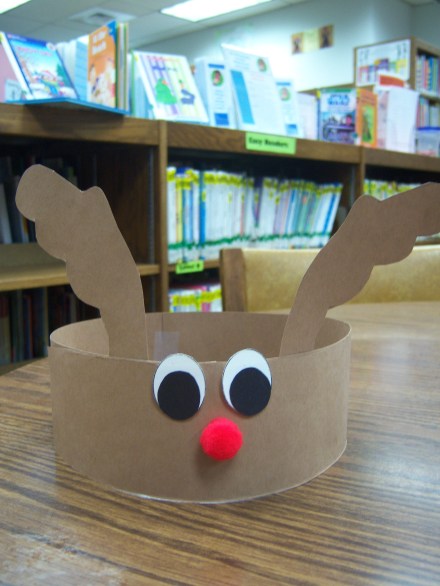
4. Do crafts: Reindeer hats & “Magic Reindeer Food.”
5. Give presents. (Candy canes and Jingle Bells on leather cords.)

This is the simplest program that I have ever created for 3 to 7 year olds — and I’ve done it three times in the five holiday seasons that I’ve been at my current job. It’s such a great way for little ones and their families to participate in the holiday season! Here’s a few things I’ve learned through my years of doing this program:

1. The book is a long book; make sure to engage children with questions throughout. Tuck a bell in your pocket and when the boy receives his bell, pull yours out. It *will* grab any kid not paying attention back to the story.

2. No one will really care who wins “Conductor Says.” And it’s not worth it to try and get a three-year-old to sit out after they’ve “lost” the game.

3. Making “Magic Reindeer Food” will inevitably leave you with a gigantic mess of sprinkles, sugar, and oats on the floor. Remember to have a broom nearby!

4. Give the candy cane presents to the parent; give the bell to the child. At my first year doing this, I mistakenly gave the children the candy and I had several meltdowns on my hands when parents demanded the candy to wait until after dinner.

Maisy & Friends

This month, I was very excited to be able to do a Maisy themed program for my 3 to 7-year-old age group. The kids at my library are crazy about Maisy, and her books are rarely on the shelf. I knew that this would be a successful program, and was pleased that I could devote a whole hour to one of their favorite characters.

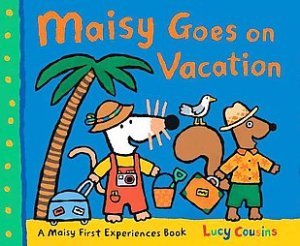
I began storytime by laying down expectations for kids and parents — something new I’m trying to see if we have some better behavior. (Which we totally did!) And then, went ahead and read “Maisy Goes On Vacation” by Lucy Cousins.

This is one of those “First Experience” books, so it walks Maisy through packing, getting to the beach, and her first day on vacation. I love the Maisy “First Experience” books because they do such a good job of explaining these new places and activities to preschoolers. After we finished this book, the kids had a lively discussion of where they had each gone on their last vacation. Super cute.

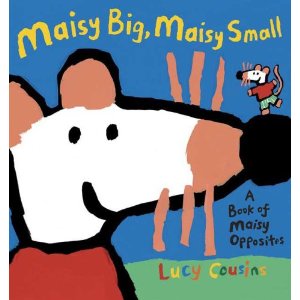
Next up, “Maisy Big, Maisy Small” by Lucy Cousins.

Introducing this book was SO easy, because the kids had seen the cover of this book in the last one. (Maisy reads one of her own books on the way to her vacation.) The kids were pumped that we had Maisy’s book here! This tale of opposites led to a lot of laughter with the kids, especially the “Maisy fluffy and Maisy spiky” page layout.

After such a rousing success, I had to follow it up with my flannelbaord: “Maisy Mouse, What House Are You In?”

Talk about another instant-hit, they LOVED guessing which house Maisy was in. I was successfully able to re-hide Maisy twice before kids started to peek. I followed this with a quick fingerplay:

“Hickory Dickory Dock”
Hickory, dickory, dock
The mouse ran up the clock
The clock struck one,
The mouse ran down
Hickory, dickory, dock

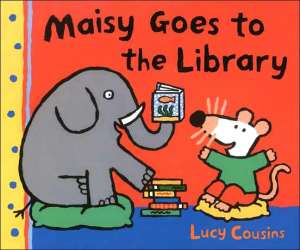
Afterwards, I asked the kids about what kind of animals Maisy and her friends were. They kept telling me that Maisy was a mouse, but I had one little girl rattle off the other animals (crocodile, elephant, etc.) very proudly. I asked if Maisy had any fish friends, and the kids shook their heads, and that led us into “Maisy Goes to the Library” by Lucy Cousins, where Maisy searches for a fish book.

This was an accidental hilarity — THREE of the kids before the program asked me where the fish books were, so that naturally led to the kids shouting out that they were like Maisy. Then, the non-fish-asking kids all said that they asked for a fish book too, to which I nodded and let it go, asking everyone to raise their hands if they wanted to find a fish book with Maisy. That let us finish our story, thankfully. We needed the next action play to help discharge some energy:

Action Play: “The Old Grey Cat”
The old gray cat is sleeping, sleeping, sleeping,
The old gray cat is sleeping in the house
The little mice are dancing, dancing, dancing (children dance)
The little mice are dancing in the house
The little mice are nibbling, nibbling, nibbling (children nibble)
The little mice are nibbling in the house
The little mice are resting, resting, resting (children rest their heads on hands)
The little mice are resting in the house
The old gray cat comes creeping, creeping, creeping (cat begins to creep)
The old gray cat comes creeping in the house
The little mice go scampering, scampering, scampering (children run in place)
The little mice go scampering in the house (cat can surprise Maisy and meow!)
Credit: Everything Preschool Mice Games

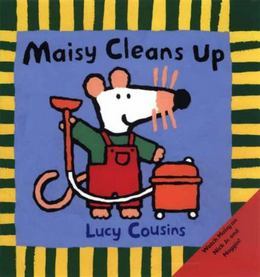
Then, our next story, “Maisy Cleans Up” by Lucy Cousins.

This one is super quick, and easy, and the kids loved guessing what kind of chores Maisy and Charley would do next. The kids clapped when Maisy and Charley finally got to eat their cupcakes after such hard work. Another quick fingerplay:

Fingerplay: “Mouse Fingerplay”
Chorus: Boing, boing, squeak
Boing, boing, squeak
A bouncing mouse is in my house
He’s been there for a week.
He came from out of nowhere
And quickly settled in.
I’m thankful that he came alone,
I heard he had a twin.
He bounces in the kitchen
He bounces in the den
He bounces in the living room
Look, there he goes again
That mouse just keeps on bouncing
Every minute of the day
He goes bounce, bounce, bounce
But he does not bounce away
Credit: SurLaLune Storytime

This was by far one of my favorite fingerplays ever. The kids were so happy to bounce their finger-mouse up and down, and we had a lot of gigglers. And a couple of them picked up the chorus by the end of the chant!

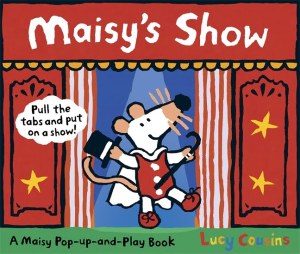
And to finish up, our grand finale was “Maisy’s Show” by Lucy Cousins.

My co-workers tease me about how much I enjoy pop-up books that don’t require you to fix the pop-up before moving on. This book is easily my new favorite pop-up book! The actions are thoughtful and appropriate, the kids are wow-ed by them, and I don’t have to fix the book before turning the page!

Lastly, the kids played a quick game of “Pin the Tail on Maisy” that I printed off from the official Maisy website.

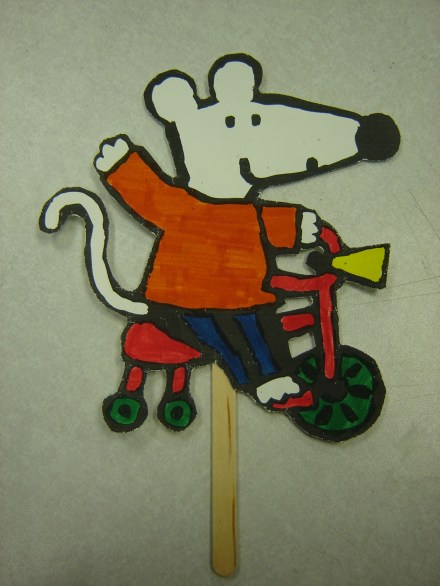
Followed by a quick craft of making Maisy ears (also on the official site) and a puppet coloring craft of Maisy riding a bicycle.

(Teen volunteers cut everything out, and had already attached the popsicle stick to the back of the puppet so that no one’s Maisy went flying suddenly.)

A hugely successful program, with no headaches, and a great afternoon spent at the library.

Shake Your Sillies Out

In addition to my storytime duties, I also try to have a once in a while special program for ages 3-7. Last week at the library, we shook our sillies out.

(Really, this program was a big excuse to use my new storytime aides that we purchased after receiving a Target Early Literacy grant this summer. And believe me, the kids LOVED the new items — especially after I told them that they were the first kids to get to use them!)

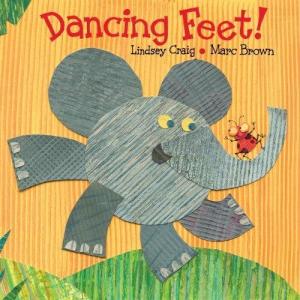
I kicked off the program with “Dancing Feet” by Lindsay Craig; illustrated by Marc Brown.

The kids tapped and stomped their feet along to this animal guessing story. The book has got great rhythm and my kids love when they get to guess which animal is coming next. The book will definitely be used again and again at my storytimes.

Next up, I read “I Know a Shy Fellow Who Swallowed a Cello” by Barbara S. Garriel.

This book is based on the “I Know an Old Woman Who Swallowed a Fly” song, so my kids figured it out pretty quickly. It was fun hearing them try to recite the story along with me as I went, but the kids did get tripped up on some of the instruments. I can see this working as a great introduction to different instruments in a music class.

And that was it for the stories at this program. The rest of the program was shaking! First up, I passed out egg shakers to do the hokey pokey:

“Hokey Pokey” (with egg shakers)
You shake your egg up, you shake your egg down
You shake your egg up, and you shake it all around
You do the hokey pokey, and you turn yourself around
That’s what it’s all about!
(more verses can include: left/right, front/back, etc.)
Credit: Bay Views Storytime Ideas

Followed by a rendition of “Shake Your Sillies Out.”

“Shake Your Sillies Out” (with shakers)
Gotta shake, shake, shake my sillies out
Shake, shake, shake my sillies out
And wiggle my waggles away
(more verses can include: clap my crazies out, jump my jiggles out,
stretch my stretchies out, yawn my sleepies out)
Credit: Raffi

I forgot the tune of this one as I started to sing, so I made it up and went with it. Most of the time, I try to sing this to “Skip to My Lou,” but I know there’s a proper tune out there!

Then, we traded our shakers for our activity scarves. I was done singing for a bit, so I put in a CD of “Let’s Go Fly a Kite” and “If You’re Happy and You Know It” for the kids to move their scarves around to. Our version of “Let’s Go Fly a Kite” has instructions on it to use with scarves.

Then, we put away our scarves and got out our parachute. Our is a small one — I think it’s a 20′ one — but it’s perfect for our space. I started off by throwing six soft balls on the parachute and just letting the kids shake the parachute until the balls fell off. We call this game “Bouncy Balls” and it is a crowd-pleaser! Everyone shrieks and laughs while we do this and I’m pretty sure that they could play this all day if I left them.

Next, we tried a brand-new parachute game with one of my favorite baby bouncy rhymes:

“The Noble Duke of York”
The noble duke of York (shake parachute)
He had ten thousand men (shake parachute)
He marched them up to the top of the hill (parachute up)
And marched them down again (parachute down)
He marched them to the left (walk to the left)
He marched them to the right (walk to the right)
And then he marched them up (parachute up)
And then he marched them down again (parachute down)
Oh, what a silly sight! (shake again)
Credit: Preschool Education – Parachute Games

Another big hit here. The kids did this one three times in a row before I went to the center of the parachute and told everyone to let go. (It makes bunching up the chute into a game, and it also goes much easier than trying to get preschoolers to fold it up.)

Our craft was just a simple paper plate shaker.

My teens pre-stapled the plates, leaving just the smallest gap for dumping beans into. We had a table just for beans, and there was a giant mess on the floor. While the kids were attaching the streamers (pre-cut) with Glue Dots, I brought out the carpet sweeper to pick up the beans — every kid INSISTED on having a turn with the sweeper to pick up the beans. After the beans were picked up, I had to put more on the floor so that everyone could have a turn.

The kids are always surprising me. A task that I absolutely hate, but find necessary, they are amazed with.

Kids Art: Octopuses

“Kids Art” was a program created to pair a book with a larger art project. The library already hosts a monthly craft program for grades 1-6, but our little kids were not getting much art — other than my storytime attempts. Thus, “Kids Art.”

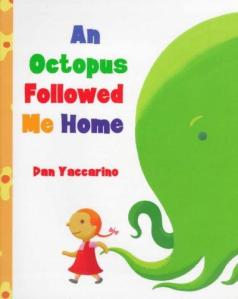
This time, I found the craft before I found the books to go with it. Luckily, there are some adorable octopus books. I began with “An Octopus Followed Me Home” by Dan Yaccarino.

I love this book, and Yaccarino’s illustrations and story crack me up. It was a great primer to begin the program today.

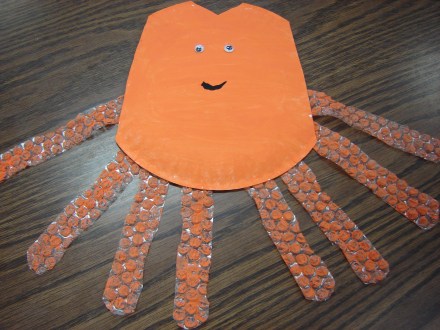
The craft for this Kids Art is this amazing octopus craft that I found in the book: “Crafty Kids : Fun Projects for You and Your Toddler” by Rosie Hankin on pg. 38-39.

My teen volunteers had pre-cut both the plate and the bubble wrap, and they also pre-assembled the craft. All the kids did was sponge paint the plate and tentacles. (We have tablecloths on our craft tables, so no worries about getting paint on the tables!)

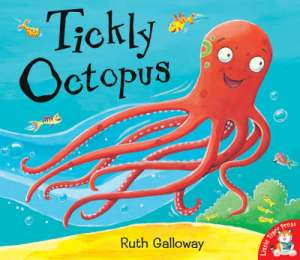
While we waited for their octopuses to dry, we played several games of Sticky Octopus (Hot Potato with an octopus beach ball) before reading our last story: “Tickly Octopus” by Ruth Galloway.

This was a great way to end our program for the day, and the kids were very excited about getting to take their octopuses home that day, since we waited for them to dry.

Kids Art: Whales

“Kids Art” was a program created to pair a book with a larger art project. The library already hosts a monthly craft program for grades 1-6, but our little kids were not getting much art — other than my storytime attempts. Thus, “Kids Art.”

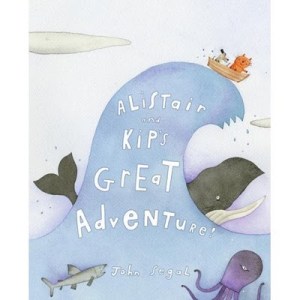
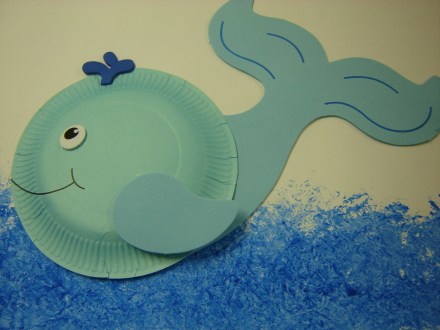
This month’s Kids Art was inspired by “Alistair and Kip’s Great Adventure” by John Segal. (And a pretty awesome whale kit from Oriental Trading.)

This is a simple story, but I particularly chose it for the part that the whale plays in the story — he saves the day! The best part about this story/art pairing was that I had a kid who announced the connection between the two at art project. He proudly proclaimed, “It’s a WHALE. Like in the STORY.”

A quick song before craft:

“Baby Beluga”

Baby beluga in the deep blue sea,
Swim so wild and you swim so free.
Heaven above and the sea below,
And a little white whale on the go.

Baby beluga, baby beluga,
Is the water warm? Is your mama home,
With you so happy?

Way down yonder where the dolphins play,
Where you dive and splash all day,
Waves roll in and the waves roll out.
See the water squirting out of your spout.

Baby beluga, oh, baby beluga,
Sing your little song, sing for all your friends.
We like to hear you.

Baby beluga in the deep blue sea,
Swim so wild and you swim so free.
Heaven above and the sea below,
And a little white whale on the go.
You’re just a little white whale on the go.

Craft time!

I paired the whale craft kit from Oriental Trading with a simple Saran Wrap painting idea. The kit was a hanger craft originally, but the whale did not hang nicely, so I had the kids glue the whale onto a piece of painting paper after we had painted the ocean with a piece of crumpled up Saran Wrap. The kids glued their whale pieces together and while everything dried…we broke out our brand-new parachute.

I recycled a super simple game from another program for grade-school kids. I had my teen volunteers cut out foam fish from different colors. And while the rest of the kids shook the parachute, I called a kid by name to “dive under” and find a certain color fish. This is a great game, not only for color recognition, but because the kids laughed the whole way through it.

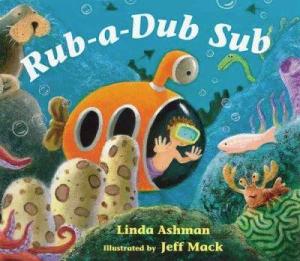
After the parachute, we settled down for “Rub-a-Dub-Sub” by Linda Ashman.

Once we were all done, kids had the option of taking their craft or leaving it to dry (we did have quite a few that needed more time to dry!), and the program was done.

Bubble Party

This was an insane program that I did over the summer for 3-year-olds to 7-year-olds. I had twenty-three kids hopping around, and to make matters more complicated — I needed our bigger programming room for space, but also needed our smaller programming room for painting! (I’ll show you how I solved this with ease!)

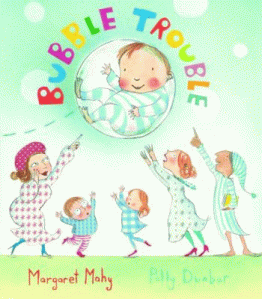
First off, I read the book “Bubble Trouble” by Margaret Mahy.

This is a pretty long book to read about a baby who accidentally gets trapped in a bubble. And I definitely recommend practicing this one *several* times because there are a lot of tongue-twisty areas. But! The kids loved this story. We had massive amounts of giggling throughout its pages.

A couple of quick songs before launching into the bulk of the program: bubbles!

“My Bubbles” (Tune: “My Bonnie Lies Over the Ocean”)
My bubbles flew over the ocean,
My bubbles flew over the sea,
My bubbles flew over the rainbow,
Oh come back, my bubbles, to me.
Come back, come back, oh come back my bubbles to me!

“Big Bubble” (Tune: “Do You Know the Muffin Man?”)
Can you blow a big bubble?
A big bubble, a big bubble?
Can you blow a big bubble,
With your bubble wand?

Credit for both: Bubble Theme – Step by Step

And then the kids played some quick games:

Bubble Dance – A game where the goal is to simply pop bubbles, not letting the bubbles hit the ground. I played a Dora CD while the children played the game which made it infinitely better. We have a bubble machine, and I literally just let it go, set up on a table. The kids were *thrilled* to be able to pop them to their heart’s content.

Bubble Bounce – A different kind of bubble. You throw balloons into the air and have the children keep the “bubbles” afloat. Super simple, I left the CD playing while we played this one too.

Bubble Race – This game can turn into a disaster very quickly if you let it. We purchased some giant bubble wands and let the kids run with them. Instead of a disaster though, the kids practiced their turn-taking and we made lines. My older kids were great examples for my younger kids and this was actually pretty flawless in terms of execution.

Our transition between spaces was easily solved by grabbing a bubble set and leading the kids through the library on a bubble parade. Simple, and totally effective.

And the whole reason why we needed to move downstairs — our craft was Bubble Art. Add 2 teaspoons of paint to bubble solution. I had the kids blow bubbles onto white construction paper. Make sure to provide lots of different kinds of tools to make bubbles. I had straws, bubbles wands, bubble pipes, etc. set out and every color of the rainbow to use. This went great, and was again, super easy and effective.

This is a program that I would definitely consider doing again — especially because I didn’t take pictures amidst all the chaos!

Kids Art: Gardens

“Kids Art” was a program created to pair a book with a larger art project. The library already hosts a monthly craft program for grades 1-6, but our little kids were not getting much art — other than my storytime attempts. Thus, “Kids Art.”

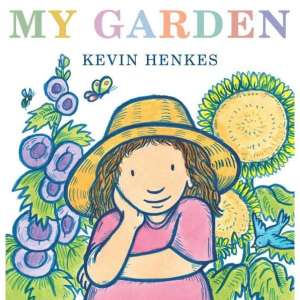
This month’s program was inspired by Kevin Henkes’s new book: “My Garden.”

This is an excellent addition to my storytime collection. While “Old Bear” will always be my favorite Henkes, “My Garden” is a very close second. The kids had a great discussion about what kind of things they would plant in their gardens once we finished.

Then, we did a little bit of extension activities:

Action Rhyme: My Garden
This is my garden (Extend one hand forward, palm up)
I’ll rake it with care, (Make raking motion on palm with 3 fingers of other hand)
And then some flower seeds (Plant motion), I’ll plant in there.
The sun will shine (Make circle with hands)
And the rain will fall, (Let fingers flutter down to lap)
And my garden will blossom (Cup hands together; extend upward slowly)
And grow straight and tall.

Song: “The Garden Song” (Tune: “Row, Row, Row Your Boat”)
Dig, dig, dig your garden
Make it smooth and neat
Push, push, push that shovel,
Push it with your feet.

Plant, plant, plant your seeds
Push them down an inch
Cover your seeds with some soil
Cover with a pinch.

Water, water, water your seed
This will help them sprout,
Sprinkle lightly and let’s not pour
And don’t let them dry out.

Sun, sun, sunshine
It will turn them green,
Carrots and radishes and peppers, too
Tomatoes and some beans.

Watch, watch, watch them grow
See them grow so tall
Put a scarecrow in the ground
To protect them all.

Pull, pull, pull the weeds
Keep your garden clear
To make them grow up and out
And stretch out here and there.

Pick, pick, pick your feast
Cook some veggie soup
You’ll have lots and lots to eat,
Enough to feed the group.

Credit for both: Step by Step – Garden Theme

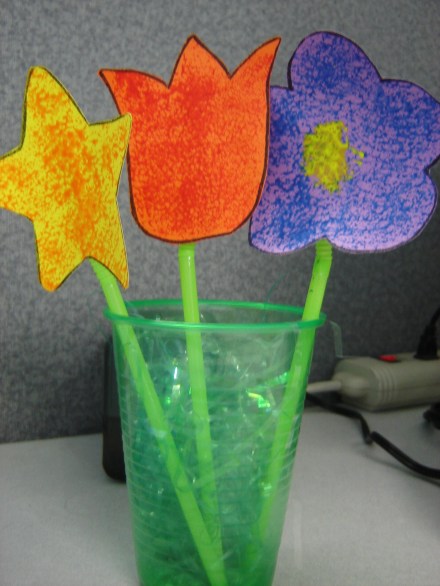
And then we moved on to our craft, a garden cup!

This was a craft that one of my co-workers did a few Mother’s Days back. My teen volunteers had pre-cut the shapes and taped the straws to the back of the flowers. The kids used a cut up sponge to do the sponge painting, but I had them grip the sponge with a clothespin. It completely eliminated most of the mess — I only needed some hand wipes to wipe a few fingers.

While their flowers dried, the kids played “Duck, Duck, Goose.” (Which is kind of springtime-ish, right?)

After that, they “planted” their flowers in cups lined with clay at the bottom (otherwise the flowers are too top-heavy and tip the cup over), and filled it up with plastic grass. A hugely successful program — I hope some of the Moms were given flower cups for Mother’s Day when they got home!

Kids Art: Penguins

“Kids Art” was a program created to pair a book with a larger art project. The library already hosts a monthly craft program for grades 1-6, but our little kids were not getting much art — other than my storytime attempts. Thus, “Kids Art.”

This month’s program was inspired by Zoe’s post “Penguin Multiplication” at her blog Playing by the Book.

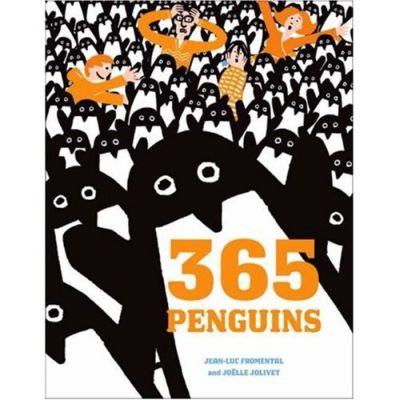
To start off, I read the book “365 Penguins” by Jean-Luc Fromental.

Can I just put in a plea right now for more giant oversized books? They hold attention like NO OTHER at storytime! The kids could not get enough of counting penguins and laughing when more penguins kept arriving. The illustrations (and limited colors of black, grey, orange, white, and light blue) add a refreshing modern look to the book. I will say that I did condense some of the multiplication areas because I thought it would lead to a lot of questions from my mostly pre-k crowd.

Next up, a few fingerplays and songs before launching into the craft!

Fingerplay: “Six Little Penguins”
Six little penguins off an iceberg did dive,
One bumped his beak, then there were five.
Five little penguins swam the ocean floor,
One saw a whale, then there were four.
Four little penguins spun around, whee-ee!
One spun off, and then there were three!
Three little penguins, with nothing to do,
One went fishing, then there were two.
Two little penguins, having lots of fun,
One fell off, then there was one.
One little penguin, when the day was done,
Went home to sleep, then there were none.

Song: “I’m a Little Penguin” (Tune: “I’m a Little Teapot.”)
I’m a little penguin
In the sea.
I can swim as fast as can be!
When I catch a fish, just look at me.
I’m as proud as I can be.

Credit for both: Step by Step – Penguin Theme

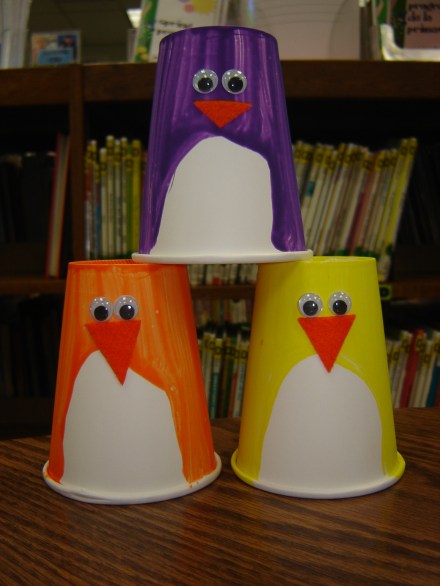
Craft: Penguin Cups.

Instructions for this were super easy. My teen volunteers had pre-cut felt triangle noses out of self-stick felt, and the googly eyes were also self-adhesive. All the kids painted a rainbow on the cup (to leave a belly for the penguin), and then filled in the rest with paint.

After the kids were finished just painting, we sat back down for a rousing game of “Polar Bear, Polar Bear, Penguin!” (Which is, as I’m sure you’ve guessed, a twist on “Duck, Duck, Goose.”) This game gave our penguin cups time to dry — and I kept sneakily checking them as we played. Once the cups were dry, the kids attached noses and eyes and took their three penguins home.

This is definitely one of my favorite programs, and I cannot wait to do another penguin program next winter.